



OKADA-ROOM
OKADA-ROOMは、佐賀県出身の日本近代洋画の巨匠・岡田三郎助(1869~1939年)を紹介する常設展示室です。
岡田三郎助は、明治~昭和初期の日本近代洋画壇のリーダーとして活躍し、大きな功績を残した画家です。
県立美術館では昭和58年の開館以来、近代洋画―なかでも岡田三郎助作品の収集、研究、展示を精力的に行い、その画業と人物の顕彰につとめてきました。
現在では、晩年の傑作《裸婦》(1935年、佐賀県重要文化財)をはじめ、油彩画や岩絵具作品約30点、デッサンや資料を含めると約170点の岡田三郎助関係資料を所蔵しており、そのコレクションは質、量ともに国内を代表するものとなっています。
| 場所 | 美術館1階OKADA-ROOM(2号展示室横) |
|---|---|
| 観覧料 | 無料 |
| 現在の展示 |
OKADA-ROOM Vol.38 特集 生誕160年 久米桂一郎 ―共に日本洋画壇を築いた盟友・黒田清輝、そして岡田三郎助とともに― 【日程】2026年7月3日(金曜日)~10月18日(日曜日) |
岡田三郎助 プロフィール
1869(明治2)年~1939(昭和14)年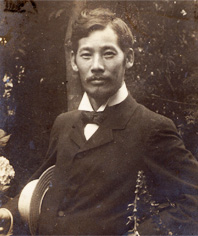 現在の佐賀市八幡小路に生まれる。
幼少時に父親に伴われて上京、東京・麹町の鍋島侯邸内に暮らす。同郷の百武兼行の油彩画を見て感銘を受け、西洋画風に陰影をつけた絵を描くようになる。
明治20年、曽山幸彦に洋画の指導を受ける。曽山没後は、曽山の画塾を引き継いだ堀江正章に師事した。
明治27年、久米桂一郎を通じ、前年フランスから帰国した黒田清輝と知り合い、明るい色彩の使い方を学ぶ。画塾 天真道場が開かれると入門、白馬会の創設に参加した。
明治30年、西洋画研究を目的とした文部省第1回留学生として渡仏。外光派アカデミズムの画家ラファエル・コランに師事した。温和で折衷的な画風のコランの指導を受ける傍ら、ルーヴル美術館で模写を行うなど、外光派以前の伝統的な西洋絵画についても研究を行う。
帰国後は東京美術学校教授となる。また、文展開設後は審査委員を務めるなど官展の代表作家として活躍。特に、優美な色彩で描かれる、品格をたたえた数々の女性像は岡田の代名詞となり、美人画の代表作家として名声を得た。
帝国美術院会員、帝室技芸員を歴任し、昭和12年には第1回文化勲章を受章した。
| 過去の展示 | ・OKADA-ROOM vol.1(2015年7月2日~9月13日) |
|---|---|
| ・OKADA-ROOM vol.2(2015年9月18日~12月13日) | |
| ・OKADA-ROOM vol.3(2015年12月18日~2016年2月28日) |
|
| ・OKADA-ROOM Vol.4(2016年3月4日~5月15日) | |
| ・OKADA-ROOM Vol.5(2016年5月20日~8月28日) | |
| ・OKADA-ROOM Vol.6(2016年9月2日~12月25日) | |
| ・OKADA-ROOM Vol.7(2017年1月1日~3月5日) | |
| ・OKADA-ROOM Vol.8(2017年3月10日~6月11日) | |
| ・OKADA-ROOM Vol.9 (2017年6月17日~11月5日) | |
| ・OKADA-ROOM Vol.10(2018年3月17日~7月16日) | |
| ・OKADA-ROOM Vol.11(2018年7月21日~11月27日) | |
| ・OKADA-ROOM Vol.12(2018年11月28日~2019年2月11日) | |
| ・OKADA-ROOM Vol.13(2019年2月26日~6月16日) | |
| ・OKADA-ROOM Vol.14(2019年6月21日~11月14日) | |
| ・OKADA-ROOM Vol.15(2019年11月23日~2020年2月24日) | |
| ・OKADA-ROOM Vol.16(2020年2月18日~5月31日) | |
| ・OKADA-ROOM Vol.17(2020年6月6日~8月30日) | |
| ・OKADA-ROOM Vol.18(2020年9月5日~12月6日) | |
| ・OKADA-ROOM Vol.19(2020年12月12日~2021年3月7日) | |
| ・OKADA-ROOM Vol.20(2021年3月13日~8月15日) | |
| ・OKADA-ROOM Vol.21(2021年8月21日~11月4日) | |
| ・OKADA-ROOM Vol.22(2021年11月13日~2022年3月6日) | |
| ・OKADA-ROOM Vol.23(2022年3月11日~5月29日) | |
| ・OKADA-ROOM Vol.24(2022年6月3日~8月14日) | |
| ・OKADA-ROOM Vol.25(2022年8月19日~12月11日) | |
| ・OKADA-ROOM Vol.26(2023年2月11日~5月28日) | |
| ・OKADA-ROOM Vol.27(2023年6月1日~9月10日) | |
| ・OKADA-ROOM Vol.28(2023年9月14日~12月17日) | |
| ・OKADA-ROOM Vol.29 (2023年12月21日~2024年2月25日) | |
| ・OKADA-ROOM Vol.30(2024年2月29日~6月16日) | |
| ・OKADA-ROOM Vol.31(2024年6月20日~8月4日) | |
| ・OKADA-ROOM Vol.32(2024年11月16日~2025年2月24日) | |
| ・OKADA-ROOM Vol.33(2025年3月1日~5月18日) | |
| ・OKADA-ROOM Vol.34(2025年5月22日~8月3日) | |
| ・OKADA-ROOM Vol.35 (2025年8月7日~12月14日) | |
| ・OKADA-ROOM Vol.36(2025年12月18日~2026年3月14日) | |
| ・OKADA-ROOM Vol.37(2026年3月18日~6月28日) |
OKADA ROOM
The Saga Prefectural Art Museum's Okada Room is a permanent exhibit showcasing works by the Saga-born artist Okada Saburosuke(1869―1939).The Okada Room was established in 2015 specifically to display Okada's srtworks. The museum's collection houses more than 200 of these works,including oil paintings,sketches,drawings,and related documents,which are exhibited in a quarterly rotation. One of the most prominent works in the collection is NUDE(1935),an oil painting created in Okada's later years. It is often named as the artist's masterpiece,and has been designated an Important Cultural Property by Saga Prefecture. Okada was one of the most prominent figures of the Yoga(Western-style)art movement in the early twentieth century. He hwas primarily an oil painter,but also worked in Nihonga(Japanease-style painting),printmaking,and sculpture. He was on the faculty of the Tokyo Fine Arts School(now Tokyo University of the Arts). He also served as a member og the Imperial Academy of Fine Arts and was appointed as an Imperial Household Artist to create works of srt for the Tokyo Imperial Palace and associeted residences. In 1937,he was awarded the first Order of Culture for contributions to Japanese art. Okada's atelier,an early twentieth-sentury art studio originally built in Tokyo,has been relocated to a site next to the Saga Prefectural Art Museum.
Introduction to Yoga Painting(洋画とは)
Yoga(Werstern-style painting)is a form of Japanese modern art that flourished in the late nineteenth and early twentieth centuries. The style blend Wersten influence wiht Japanese sensibilities,often using oil on canvas rather than ink and mineral pigments on paper or silk. Typical subjects include landscapes as well as poetraits,still lifes,and nudes,which were uncommon in traditional Japanese art at tha time. Soon after the Meiji Restoration of 1868, many Japanese artists traveled to Europe to study Western art. Early progenitors of the Yoga form studied under prominent European artists,mastering oil painting and returning to Japan with knowledge of popular Europian art movements of the time. Later figures in the movement,such as Okada Saburosuke(1869-1939),would develop distinctly Japanese adaptations of Western modernism in their approaches to color and atmosphere. Okada,born in Saga,Kyushu, traveled in France in 1897,studied under Raphael Collin(1850―1916),and returned to Tokyo in 1902. He became an influential figure in the YOga movement and opened the Women's Institute of Werstern Painting at his Shibuya-based atelier in 1926. The building was later relocated to and reconstructed at the Saga Prefecture Museum in 2018. As avant-garde and experimental styles gained prominence in the mid-twentieth century,the popularity of Yoga waned, but its inflience can still be seen in Japanese art today.
(この英語解説文は観光庁の令和7年度地域観光資源の多言語解説整備支援事業で英語ネイティブの取材に基づき作成しました。)
